
If your pour-over coffee tastes sharp, bitter, weak, or drains too quickly, grind size is one of the first places to look. There is no single setting that works for every bean and brewer, but there is a simple way to find a dependable starting point.
For a cone dripper, start around a medium-fine grind: finer than coarse sand, but not powdery. Then change only one thing at a time. That makes it much easier to understand what your cup is telling you.
The short answer
Start at a medium-fine setting for pour-over coffee. Use the same coffee dose and water recipe for two or three brews before moving your grinder slightly finer or coarser.
If you are new to brewing, begin with 15g of coffee and 250g of water. For the full ratio method, read our simple pour-over coffee ratio guide.
What the right grind should look and feel like
You do not need to count clicks or copy another person's setting. Every grinder is different. Instead, look for grounds that are reasonably even and sit between fine sand and table salt in texture.
- Too fine: the water drains very slowly; the cup may taste bitter, dry, or heavy.
- Too coarse: the water runs through quickly; the cup can taste sharp, thin, or sour.
- A useful starting point: a steady drawdown with a cup that tastes balanced rather than harsh or hollow.
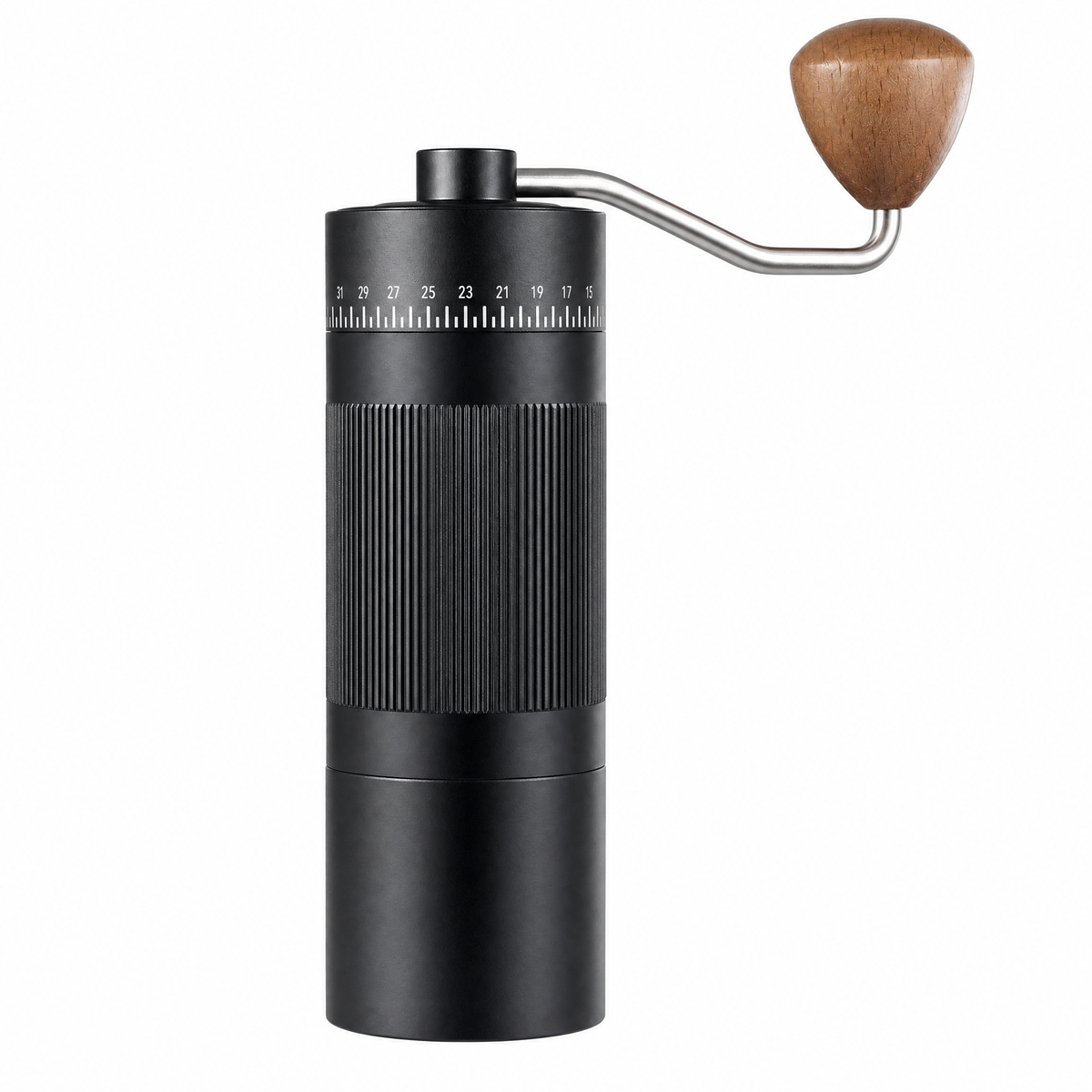
The label beside your grinder's adjustment ring is a reference point, not a universal recipe. Note the setting that tastes best with a particular coffee so you can return to it later.
Make one change at a time
When a brew is off, it is tempting to change the dose, water temperature, pour speed, and grind all at once. That makes the next cup harder to learn from. Use this simple order instead:
- Keep your dose and water ratio the same.
- Change the grind only a small amount.
- Brew again with a similar pour pace.
- Taste before making another adjustment.
If the cup tastes sour or drains unusually fast, try a slightly finer setting. If it tastes bitter or the brew stalls, try a slightly coarser setting. Small moves are enough; large jumps make it easy to overshoot the sweet spot.
Why fresh grinding helps the process
Grinding just before you brew gives you one more variable you can repeat and adjust. A manual grinder is a practical fit for one or two cups when you want a compact, quieter routine at home, work, or while travelling.
The goal is not to chase a perfect number. It is to find a setting you can return to consistently, then adjust gently when you open a different coffee.
A simple starter workflow
For a first home setup, keep the tools focused:
- A manual coffee grinder for fresh whole beans
- A glass cone dripper set with 40 filters
- A gooseneck kettle if you want more control over your pour
- A scale when you are ready to repeat the same recipe more closely
If you would rather start with the core tools together, see the Slow Mill 6-piece pour-over starter kit.
Frequently asked questions
Is medium-fine always the best pour-over setting?
No. It is a useful beginning, not a rule. Bean density, roast level, dose, filter paper, and your pour speed can all change the result. Taste the cup and adjust in small steps.
Should I change grind size or water ratio first?
For a new recipe, keep the water ratio steady first and adjust the grinder slightly. Once the cup is close, you can explore small ratio changes if you want more strength or a lighter cup.
Can a manual coffee grinder work for pour-over?
Yes, provided you can make repeatable adjustments and grind the amount you need for your brew. A manual grinder is especially practical for one or two cups and a smaller coffee setup.
The next cup is the useful one
Write down the coffee, dose, water amount, and grinder setting after a brew you enjoy. That small note is more useful than chasing a universal grind number — and it gives you a calm, repeatable place to start next time.
Published by Slow Mill Coffee. Product details, delivery options, and final shipping costs are shown on the relevant product page and at checkout.