You've decided to grind fresh. Smart move. Freshly ground coffee makes one of the biggest differences in your cup — more than the brewing method, more than the kettle, and often more than the beans themselves.
But walk into any kitchen store (or scroll through Amazon) and you'll find dozens of manual grinders, ranging from $15 to $300. This guide cuts through the noise. Here's what actually matters when buying your first manual coffee grinder — and which one we'd recommend for beginners starting with pour-over.
Why Manual? Why Not Electric?
Electric grinders are faster, but manual grinders have a real advantage for beginners:
- Lower cost for better grind quality. A $45 manual grinder typically outperforms a $45 electric grinder. The burr quality is higher relative to price.
- Quiet. No motor noise at 6am.
- Compact. Takes up almost no counter space.
- Portable. Take it to the office, hotel, or camping.
The only real downside is time — grinding by hand takes 60–90 seconds. If that's a deal-breaker, go electric. But for most beginners, it's a ritual worth keeping.
The 4 Things That Actually Matter in a Manual Grinder
1. Burr Type: Conical Burrs Only
Grinders work in two ways: blade or burr. Never buy a blade grinder for coffee. Blades chop randomly, creating uneven particle sizes that make your coffee bitter and unpredictable.
Burr grinders crush beans between two surfaces, producing consistent particle sizes. Consistent grind = consistent extraction = better coffee. Look for conical burrs made from steel or ceramic.
2. Grind Adjustment: Steps vs. Stepless
Your grinder needs to let you adjust how coarse or fine it grinds — this changes the flavor completely.
- Stepped adjustment (clicks into positions) is easier for beginners — you can dial in a setting and come back to it.
- Stepless adjustment gives more precision but requires more practice to repeat.
For pour-over beginners, a stepped grinder is the easier starting point.
3. Capacity: 20–25g Is Enough
Most pour-over recipes use 15–20g of coffee per cup. A grinder with a 20–25g capacity handles a single serving without refilling mid-grind. Bigger isn't necessary unless you're making coffee for two.
4. Build Quality: Handle, Body, and Catch Cup
Cheap grinders wobble. The handle spins loose, the body flexes, and ground coffee ends up everywhere. Look for:
- A solid, non-slip body (stainless steel or high-density plastic)
- A handle that folds or locks for compact storage
- A catch cup that seals so grounds don't scatter
What Grind Size Do You Need for Pour-Over?
Pour-over uses a medium to medium-fine grind — roughly the texture of sea salt. Too coarse and your coffee is watery and weak. Too fine and it's bitter and over-extracted.
Your grinder's job is to hit that range consistently, every morning. A quality burr grinder does this reliably; a cheap grinder drifts over time.
Our Recommendation for Beginners
Slow Mill Pick
Slow Mill Manual Coffee Grinder
Conical steel burrs. Stepped grind adjustment. Non-slip grip. Compact enough to fit in a travel bag. Designed specifically for pour-over — and quiet enough for early mornings.
Use WELCOME10 for 10% off your first order. Free U.S. shipping on orders over $49.
Do You Need Anything Else to Start?
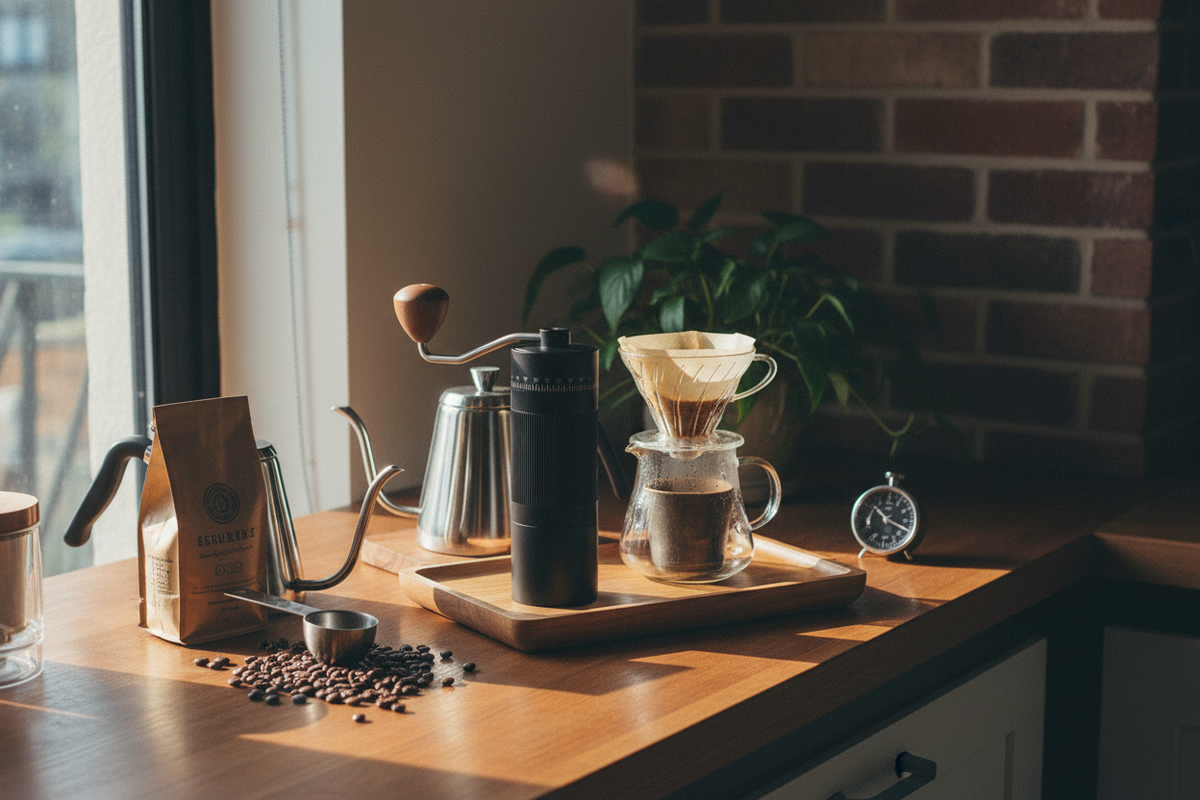
A grinder alone isn't enough for pour-over. Here's the minimum setup:
- Manual grinder — for fresh-ground coffee every time
- Gooseneck kettle — for controlled, even pouring
- Cone dripper + filters — holds the coffee during brewing
- A mug or server — to catch your coffee
If buying separately feels overwhelming, our Pour-Over Starter Kit — 6 Pieces includes everything above in one box. It's the fastest way to go from zero to your first great pour-over cup.
Common Beginner Questions
How long does it take to grind coffee by hand?
For a single pour-over serving (15–20g), expect 60–90 seconds of grinding. It gets faster as you find your rhythm.
How often should I clean my grinder?
A quick brush-out every week prevents stale coffee oils from building up. A deeper clean every 1–2 months keeps the burrs sharp and your coffee tasting fresh.
Can I use a manual grinder for espresso?
Technically yes, but espresso needs an extremely fine, consistent grind with very precise adjustment. Most beginner manual grinders aren't optimized for espresso. Stick to pour-over, French press, or drip to start.
Is a more expensive grinder worth it?
At the beginner level, no. A quality grinder in the $40–60 range produces excellent pour-over results. Upgrade later when you've developed a taste for the difference.
Ready to brew?
Start with the right grinder. Notice the difference immediately.
The Slow Mill Manual Coffee Grinder is designed for beginners who want real flavor without the complexity. Free U.S. shipping. Use WELCOME10 for 10% off.
Shop Manual Grinder →